Reactive Oxygen Species (ROS)
Reactive Oxygen Species (ROS) are oxygen-containing molecules characterized by high reactivity. They are generated, among other processes, during physical processes such as gas discharges and cold plasma generation. In the context of Cold Atmospheric Plasma-Aerosol (CAP-A), ROS play a complementary role. The mechanical detachment and displacement effect of the aerosol is complemented by the activity of ROS.
Definition and physical-technical Classification.
ROS are highly reactive oxygen-containing compounds. Some ROS contain unpaired electrons, which contribute to their particularly high reactivity toward organic compounds. Typical ROS relevant to cold plasma processes include:
- Hydroxyl radical (OH·)
- Hydrogen peroxide (H₂O₂)
- Superoxide (O₂·⁻)
ROS are generated in various physical processes, including gas discharges, exposure to UV radiation, and cold plasma processes. Their lifetime is generally short. They rapidly react with their immediate environment and are therefore not expected to penetrate into deeper tissue layers.
Generation within the CAP-A Process.
Cold Atmospheric Plasma-Aerosol (CAP-A) is an indirect cold plasma process. The plasma source generates cold plasma reaction products, including ROS such as hydroxyl radicals (OH·). In a separate step, these products condition an ultrasonically nebulized sterile treatment aerosol consisting of Aqua ad injectabilia. The aerosol becomes electrostatically charged and benefits from the resulting dispersion effect.
A key feature of the process is that the plasma source does not come into direct contact with the patient's skin. Plasma generation and application are spatially and functionally separated. The conditioned aerosol is subsequently applied to the wound or the surrounding wound area.
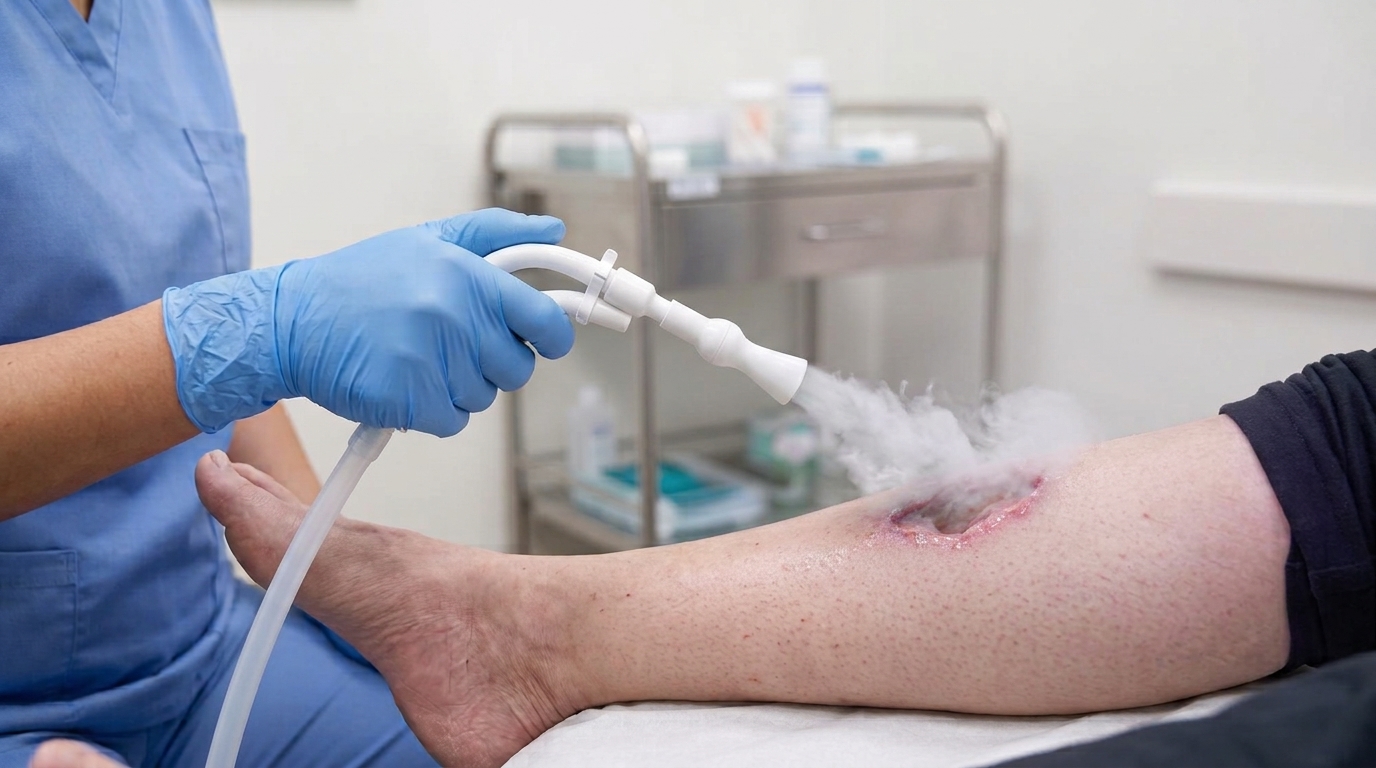
Mechanism of Action.
ROS play an important role in the mechanism of action of CAP-A.
1. Primary: Mechanical detachment and displacement effect.
The electrostatically charged aerosol mechanically loosens and displaces microorganisms from the skin surface, thereby reducing the microbial load of the transient flora.
2. Secondary: ROS as a complementary factor.
The ROS contained in the aerosol enhance aerosol dispersion and provide additional support for microbial inactivation. The effect remains limited to the wound surface and the surrounding skin; deeper tissue layers are not affected.
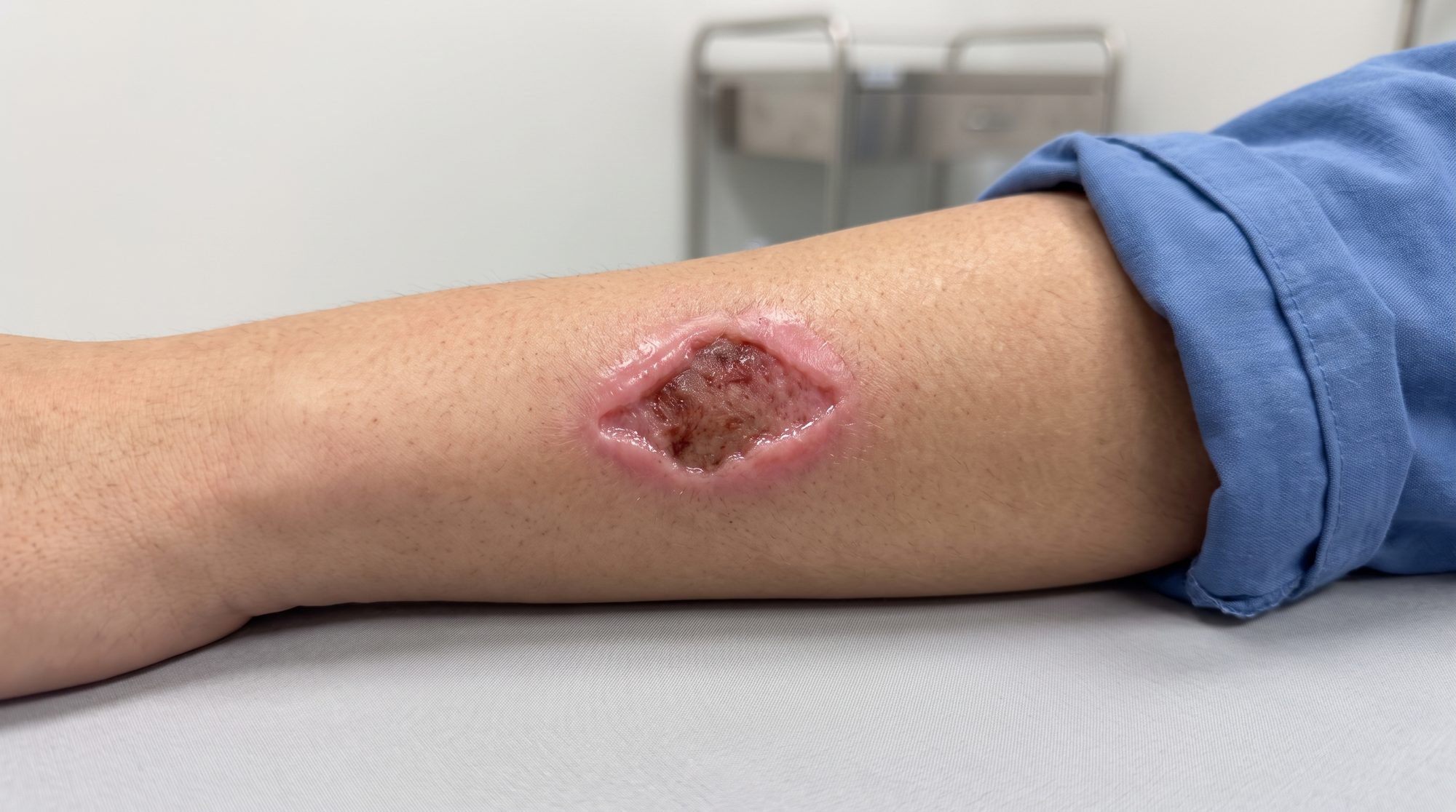
In the context of this glossary, ROS refers exclusively to those reactive oxygen species generated at the plasma source that condition the CAP-A treatment aerosol. PLASMO®HEAL PRO is a medical device with a primarily physical mechanism of action.